If you are having trouble viewing this email please Click here
BRASH CONSULTING ENEWS - MARCH 2010 |
Every now and then there’s a story that touches us deeply…
 It was 2004 and a Melbourne daily newspaper published a photo on the front page of a young mother injecting heroin in a laneway with her young toddler craning to see his mummy who had obviously positioned the pusher in such a way as to shield the baby from the stark tragedy of her addiction. That photo and the accompanying story sparked a frenzy of debate about narcotics addiction, supervised injecting rooms, the legalisation of hard drugs and divided national opinion on the messages we send by any given strategy that attempts to combat the problem. It was 2004 and a Melbourne daily newspaper published a photo on the front page of a young mother injecting heroin in a laneway with her young toddler craning to see his mummy who had obviously positioned the pusher in such a way as to shield the baby from the stark tragedy of her addiction. That photo and the accompanying story sparked a frenzy of debate about narcotics addiction, supervised injecting rooms, the legalisation of hard drugs and divided national opinion on the messages we send by any given strategy that attempts to combat the problem.
 I am reminded of the dramatic impact of a single person’s story in the wake of the tragic death of young Brodie Panlock who committed suicide in the aftermath of pervasive bullying by four other employees at the Hawthorn coffee shop where she worked. This tragedy, prosecuted by WorkSafe, some weeks ago seems to have touched every client organisation with which I have worked these past weeks and flagged workplace bullying as a most insidious and potentially traumatic and debilitating phenomenon. But consulting in this area as we do and have done for fourteen years, the potential physical and psychological impacts of this came as no surprise to us. Let’s hope this case marks a turning point in the way managers and employees view bullying. No one strategy can combat workplace bullying. However there are a few golden rules which in our experience markedly separate toxic cultures from great places to work. I am reminded of the dramatic impact of a single person’s story in the wake of the tragic death of young Brodie Panlock who committed suicide in the aftermath of pervasive bullying by four other employees at the Hawthorn coffee shop where she worked. This tragedy, prosecuted by WorkSafe, some weeks ago seems to have touched every client organisation with which I have worked these past weeks and flagged workplace bullying as a most insidious and potentially traumatic and debilitating phenomenon. But consulting in this area as we do and have done for fourteen years, the potential physical and psychological impacts of this came as no surprise to us. Let’s hope this case marks a turning point in the way managers and employees view bullying. No one strategy can combat workplace bullying. However there are a few golden rules which in our experience markedly separate toxic cultures from great places to work.
- Compliance training is regularly provided and bullying (or any form of harassment) is underscored as a serious organisational issue. It may be hard to believe reading testimony of Brodie’s case, but not all bullies are malicious. Some workplace bullies are incidental or accidental bullies who may lack empathy or rationalise that banter, teasing, taunting and verbal abuse are simply signs of a jocular Aussie culture. People must know what behaviour can constitute bullying and be called to account. It is also respectful and fair to inform people about the “rules” to which they will be held at law and by policy.
- Senior leaders consistently model the behaviour they want others to adopt. This sounds so obvious but do we all live that every day and all day?
- As much time, money and resources (or more) are invested in leadership development and interpersonal skills and Emotional Intelligence development as into compliance training and policy development. The ability to persuade without manipulation, to have courageous (high risk/ high value) conversations and “do the hard stuff” without being overzealous, autocratic or dictatorial are characteristic of good cultures. Some people, even those with reasonable intent, can struggle to communicate or lead effectively and in the execution of legitimate messages, they intimidate.
- Ensure that managers understand their responsibility in calling bad behaviour and taking complaints seriously. Staff must feel safe to voice concerns. If they fear ridicule or retaliation, they are likely to suffer in silence or leave; both of which can have serious consequences for themselves and for the organisation that fails to protect them. In Brodie's case, the café owner was found to have permitted, encouraged and/or tolerated the cruel treatment of Brodie.
- Inappropriate behaviour is jumped on early and counselling, behavioural coaching and or disciplinary action are applied consistently, fairly and proportionally. Not all transgressions must invoke discipline. Depending on the circumstances, behavioural coaching has been shown to be very effective, in conjunction with, or in place of, disciplinary warnings particularly where the determination is that the bully is genuinely remorseful, motivated to change and may have been unaware of their impact on others. More of our clients are seeking advice on a range of ways in which they can enhance organisational culture and we are constantly collaborating on creative ways to sell the benefits of a great culture and then move to create one. In some organisations, debriefs with both parties in place of a formal grievance or in the aftermath of formal investigations is becoming almost routine and this can assist dramatically in helping both parties move on safely and productively.
- Senior leaders must be honest with themselves about the organisational impact of high velocity change and the push for high performance. They need to recognise the possibility that turning up the heat on employees and the flow on effects of insecurity and work strain can create pretexts for behaving badly. The mature organisation does not sacrifice employee safety or dignity for business results but sees employee safety, respect and reward for contribution as essential precursors to high performance. The mature organisation does not pay lip service to change management and puts time, money and expert resources into effectively managing employee transition.
For more information on good and toxic cultures and consultancy services in workplace justice issues, visit www.workplacejustice.com.au
|
Bank Account(ability!)
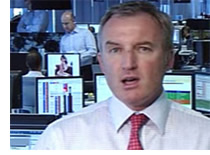 If we consider other newsworthy stories of the past few weeks that certainly got some attention ‘where we live’, one was surely the incident captured on evening news of a Macquarie Bank employee perusing email photographs of our own Aussie supermodel Miranda Kerr on prime time telly. The debate about what should or shouldn’t happen to Dave (the intrepid Kerr gazer), the ongoing Tiger Woods saga, the embattled Peter Garrett and the insulation issue, the sacking of Andrew Lovett, a gifted footballer before he ever got to play for his new team, all remind us of the fact that whether we like it or not, it is almost inevitable that people with personal or positional power are going to be held to account for their action or inaction. If we consider other newsworthy stories of the past few weeks that certainly got some attention ‘where we live’, one was surely the incident captured on evening news of a Macquarie Bank employee perusing email photographs of our own Aussie supermodel Miranda Kerr on prime time telly. The debate about what should or shouldn’t happen to Dave (the intrepid Kerr gazer), the ongoing Tiger Woods saga, the embattled Peter Garrett and the insulation issue, the sacking of Andrew Lovett, a gifted footballer before he ever got to play for his new team, all remind us of the fact that whether we like it or not, it is almost inevitable that people with personal or positional power are going to be held to account for their action or inaction.
In high performance cultures, and particularly if leaders are exhibiting what Jim Collins calls Level 5 leadership, they take the blame when things go wrong and give credit to their team members when things go well. Buck passing, excuses, rationalisations and blaming only cultivate the same behaviours in others. Whether or not Tiger Woods was or wasn’t sincere and whether or not he is or isn’t a sociopath (you might want to ask a clinical psychologist for their opinion on that one!) is one thing to contemplate. However we know he has no chance at rehabilitating himself or his brand unless he does accept responsibility, and hides behind no one for his decision making. This is a good reminder to all leaders about the minimum conditions for success, credibility and respect from others. For more thoughts on the Macquarie Dave Saga, see my 14 Feb blog post at www.leannefaradaybrash.com
|
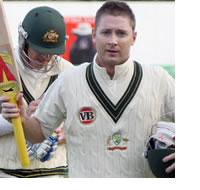
Train Wrecks and Bingles but Clarke Bats On
Many clients in the past week have asked me to comment on the Lara Bingle/Michael Clarke saga even though I am not predominantly a populist writer.
You may be surprised to hear there’s a lot we can learn from their much publicised bust-up.
Visit my blog on Train Wrecks and Bingles but Clarke Bats On
|
What's Going On?

Last week and I was delighted to receive from Amazon, my complimentary copy of the three volume series to which I was asked to contribute last year.
The landmark series, edited by an outstanding American Academic, Michele Paludi, and entitled Feminism and Women’s Rights Worldwide was published by Praeger in the US. The series addresses pivotal events, issues, and controversies related to the global women's movement, historical and absolutely contemporary, with chapters addressing reproductive rights, sexual slavery, harassment, forced marriage, mortality in birthing, domestic violence and rape, job discrimination, pay inequities, women in leadership positions, and other crucial issues.
I agreed to contribute because I believe the battle for women’s rights is a fight for human rights. According to Praeger, "these volumes offer today’s generation the real story of feminism and a call to action for the next wave of advocacy in education, religion, politics, the military, personal relationships, the workplace, and the home.” Contact us at support@brashconsulting.com.au if you would like to order a copy.
Did you know that 70% of the world’s poor are women? And that 75% of the civilians killed in war are women and children? We at Brash Consulting hope that all our clients and supporters celebrated International Women’s Day on 8 March in a meaningful way.
|
By the way…
Thanks for the great feedback we are getting on our newsletters. Clients and colleagues are often telling us they find them interesting, informative and valuable.
Happy Easter, Greek Easter and Passover to those who celebrate them! And a safe and enjoyable break to all.
|
To be removed from our mailing list, please email info@brashconsulting.com.au with ‘unsubscribe’ in the subject line.
|
|